博文

Gravity concentration and its early use

图片
Introduction of Gravity concentration In beneficiation plant , Gravity concentration is a process in which particles of mixed sizes, shapes, and specific gravities are separated from each other in a fluid by the force of gravity or by centrifugal force. The process is designed to separate particles by specific gravity, but to a certain extent it also separates particles on the basis of size and shape. Historically, the process has been used to separate ore minerals or coal from their associated gangue (refuse) on the basis of mineral density (Table 1). Gravity concentration is often equally applicable to other common industrial processes, such as degritting food grains, paper pulp, and chemical raw materials; recycling municipal solid waste; recovering and recycling spills, splatters, skimmings, skulls, turnings, and grindings from metal production and fabrication; and remediating toxic waste piles. Early Use and Development of Gravity Concentration Gravity concentration ...

Hydrocyclone Classifiers

图片
In beneficiation plant , Hydrocyclones is an important mining machine and use centrifugal forces to classify particles in a fluid that experiences essentially free vortex motion inside the device. They are widely used in mineral processing plants today because of their extremely favorable capacity-to-size ratios and reasonably low maintenance. Basic Characteristics of hydrocyclone A cutaway view of a typical hydrocyclone is shown in Figure1. Feed slurry, either pumped or flowing by gravity, enters the inlet through a feed pipe and flows at a tangent to a cylindrical feed chamber under pressure. To increase retention time, a cylindrical section is often added between the upper feed chamber and the lower conical section. This section has an included angle (cyclone angle) in the range of 12° (for cyclones of 10-in. diameter or less) to 20° (for larger cyclones). Fine particles leave through the vortex finder and are directed to further processing by the overflow pipe. Coarse partic...

Spiral or Rake Mechanical Classifiers

图片
As a important separation equipment in beneficiation plant , Spiral or rake classifiers are semirectangular tanks with parallel sides (sides may flare somewhat toward the overflow end) and a sloped bottom. Inside the tank, a rake or a spiral mechanism conveys coarse material upward to a sands return chute and back to ball mill . Figure 1 shows schematics of a rake classifier and the more modern spiral classifier . General Characteristics of classifier. Take L to be the length of the classifier. Feed enters at a point that is about 0.6 L (high weir type) or 0.5 L (overflow end of spiral submerged) or 0.3 L (low weir type) from the overflow weir (the overflow weir is a movable baffle plate at the overflow end, the height of which can be adjusted to control pool area). Spirals are preferred to rakes because spirals cost less to maintain. Either rakes or spirals move coarse sand out of the tank. Rakes employ a repetitive rectangular trajectory whose long dimension is parallel ...

Size classification and classifier

图片
In mineral processing plant , Size classifiers separate particles of various sizes, shapes, and specific gravities in fluids (e.g., water or air) under the influence of gravitational or centrifugal forces. In principle, such devices should make a size split based on particle size rather than other properties. Unfortunately, the split is always imperfect. Measures of the performance of size classifiers are similar to those employed for screens, except that the definition of cut size is not as simple. Separations are normally made between about 20 and 325 mesh, although some pneumatic devices size readily to below 95% passing 0.010 mm. Classification devices attempt to take advantage of the following aspects of particle behavior 1. Smaller particles fall more slowly in fluids than do larger ones. 2. In free vortex motion (i.e., cyclones), centrifugal forces have greater influence on large particles and lesser influence on small particles. 3. Small particles, having less inertia,...

Beneficiation equipment industry screen

图片
In beneficiation plant Screening is one of the oldest of unit operations and is used in many industries worldwide. Many screening devices and a variety of screening surfaces are available in the marketplace. Choice depends on the size range involved, the nature of the application, the desired capacity, and the corresponding efficiency of the screen. Screen performance, which is measured in several ways, becomes important and is amenable to mathematical description. Most large-scale screening operations are continuous. Screen deck replacement and normal maintenance influence the operating expense, which is relevant to performance criteria. Classes of Screens Industrial screens are categorized in Table 1 by mode of operation or motion; Photographs of typical vibrating screens  encountered in the mineral industry are provided in Figure 1.  Major components of vibrating screen systems are the screening surface, the vibrating assembly, the base frame, the support...

Size separation of mineral processing

图片
Size separation is the parceling of particulate material on the basis of size. In mineral processing plants , such parceling means that the transfer of material unsuited for a specific processing step (such as the transfer of fines to a primary jaw crusher or the transfer of oversize to flotation) is avoided to improve the performance or efficiency of equipment or metallurgical processes. Devices employed for size separation may be screens (grizzlies, fixed screens, revolving screens, shaking screens, and vibrating screens ) or classifiers (nonmechanical classifiers, mechanical classifiers, cyclone classifiers, and pneumatic classifiers). Screens allow certain particles to pass through screen apertures, whereas classifiers act on particles suspended in a medium to separate them based on differences in characteristics such as particle size and specific gravity. In general, classifiers behave like imperfect screens. Mineral processing circuits employ sizing devices for various reaso...

Financial aspects of comminution in beneficiation plant

图片
The cost of comminution operations is typically a very significant proportion of the total cost for mineral processing. Comminution costs are conveniently divided into two parts: Capital costs (the original cost of equipment and its installation) and operating costs (the day-to-day costs associated with power, wear parts, maintenance, and labor provided by operators). Typical capital costs are shown in Tables 1 and 2  for a copper ore and an iron ore processing operation, respectively. The total investment cost for the copper crushing and grinding plant is about $48.8 million. The total investment cost for the iron ore crushing and grinding plant is about $54.2 million. It should be kept in mind that the hardness of these two ore types differ by 113% and that the final product size of each is different. Copper ore product size required for flotation is about 80% passing 100 mesh, whereas the iron ore size required for making iron ore pellets is approximately 80% passi...

Two cases of beneficiation plant control

图片
To conclude the discussion on mineral processing plant control, two case studies are presented. One is taken from crushing and the other from grinding. Crushing Case Study In the new millennium crusher control applications in mineral processing will be largely restricted to primary and autogenous/semiautogenous pebble crusher applications. Nevertheless, there are still some crushing plants in operation, and from a pedagogical perspective, some interesting lessons can be learned from the control work that was performed in these types of operations. Figure1 provides the process and instrumentation layout required for the example. Because the secondary crushing circuit was proving to be a bottleneck for overall plant production, the general objective was to increase throughput.  Fig1. Secondary crusher control process and instrumentation layout A number of control problems in this circuit rendered more traditional methods ineffective, including the following: 1....

6Sshaking table

图片
In the gravity separation process, the shaking table is the most common equipment. In many kinds of shaking table, the 6S type is the most common application. The structure of the 6S shaking table produced by Sinonine is shown as below: sinonine can also provide  sand washing plant  epc.

mineral processing plant control Strategies

图片
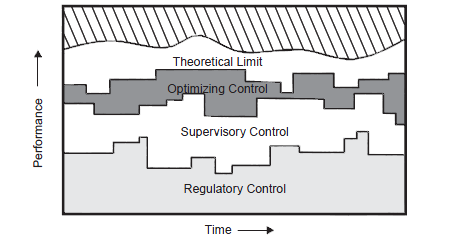
In mineral processing plant , although there may be elements of discrete I/O in control strategies (e.g., opening or closing cyclones to maintain header pressure), they are normally designed to continuously modulate manipulable variables (e.g., feeder speed, valve position, pump or mill speed) to ensure that the controlled variables (e.g., ore flow, water flow, tank level, particle size) are at or near the set-point value. For that reason the emphasis in this section is on continuous control, and Figure 1 conveniently summarizes the levels of continuous control, while offering insight into the structure of control strategies. Fig 1. The levels of continuous control Fig 1 illustrates that there is some performance benefit associated with each level of control strategy. It also carries the important implicit message that control strategies are hierarchical. That is, one cannot build an effective supervisory strategy if the regulatory strategies underpinning it are ineffective. ...

PROCESS CONTROL IN COMMINUTION

图片
In a beneficiationplant , Process control is an essential component of any comminution system. The widespread adoption of automation in mineral processing plants began more than four decades ago, when rudimentary regulatory strategies for regulation of ore, water, and slurry were successfully deployed on single-loop analogcontrollers. Virtually all plants built today have a sophisticated digital control system that enables all basic control functions, providing the human – machine interface (HMI), and acting as the gateway to plant management information systems, which couple process and business controls. In addition, most new plants adopt advanced process control applications to deal with the multivariable nature of process optimization in real time. Although the journey has not always been smooth, the industry has increasingly embraced process control as one of the most capital-effective investments available in the pursuit of lower costs and increased revenues. The need for proc...